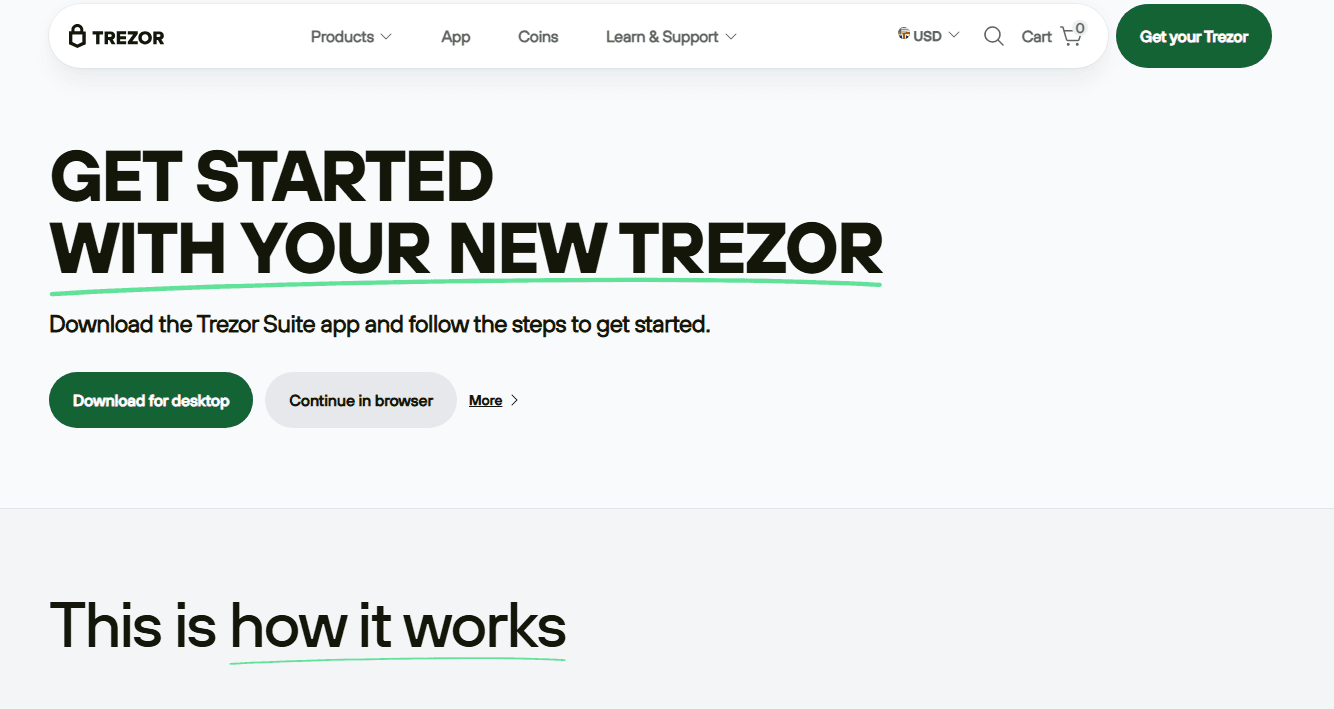
Trezor.io/Start: A Simple Way to Secure Your Cryptocurrency
Cryptocurrency gives people direct ownership of their money, but that ownership also comes with responsibility. There is no central authority to protect your funds if your private keys are lost or stolen. This is why secure storage is essential. Trezor, a well-known hardware wallet, offers a reliable solution for protecting digital assets. The setup process begins at Trezor.io/start, where users are guided through the steps needed to secure their crypto properly.
This article explains how Trezor works, why it is important, and how users can safely get started.
What Is Trezor and How Does It Work?
Trezor is a hardware wallet, which means it stores cryptocurrency private keys on a physical device rather than on an internet-connected system. Private keys are what allow users to access and control their crypto. If someone gains access to these keys, they gain access to the funds.
By keeping private keys offline, Trezor protects them from online threats such as hacking, malware, and phishing attacks. Even if a computer or smartphone is compromised, the crypto stored on a Trezor device remains secure.
Trezor supports many popular cryptocurrencies along with thousands of additional tokens, making it suitable for a wide range of users.
Why Secure Storage Is Necessary
Many beginners store their cryptocurrency on exchanges or mobile wallets because they are convenient. However, these storage options have serious drawbacks:
Exchanges are frequent targets for cyberattacks
Online wallets can be affected by viruses or spyware
Third-party platforms control access to funds
Phishing scams can steal login credentials
A hardware wallet like Trezor eliminates most of these risks. Transactions must be approved directly on the device, and private keys never leave the wallet. This gives users full control and significantly increases security.
Getting Started with Trezor
The setup process is designed to be simple, even for users with little technical experience. Below is an overview of what to expect:
1. Select a Trezor Model
Trezor offers devices such as Trezor One and Trezor Model T. Both models provide strong security, while the Model T includes additional features like a touchscreen interface. Users can choose based on their preferences and budget.
2. Create a PIN Code
During initialization, users are asked to create a PIN code. This PIN prevents unauthorized access to the wallet. If the wrong PIN is entered multiple times, the device automatically wipes itself to protect the funds.
3. Write Down the Recovery Seed
Trezor generates a recovery seed, usually consisting of 12 or 24 words. This seed is the only way to recover the wallet if the device is lost, stolen, or damaged.
The recovery seed must be written down and stored offline in a secure place. It should never be shared or stored digitally.
4. Confirm and Manage Transactions
After setup, users can send and receive cryptocurrency securely. Each transaction must be confirmed on the Trezor device, ensuring transparency and protection against unauthorized transfers.
Main Features of Trezor Wallets
Trezor wallets are trusted globally due to their strong security and transparent design. Key features include:
Offline storage of private keys
Support for a wide range of cryptocurrencies
Recovery seed for wallet restoration
Optional passphrase for extra protection
Open-source software for public security review
These features make Trezor suitable for long-term investors as well as frequent crypto users.
Security Tips for Trezor Users
Using a hardware wallet is a major step toward safety, but good habits are equally important:
Keep the recovery seed in a secure offline location
Never share the recovery seed or PIN
Verify transaction details on the device screen
Keep firmware updated to the latest version
Avoid using the wallet on unknown or public computers
Following these practices greatly reduces the risk of asset loss.
Why Trezor Is a Trusted Name
Trezor was one of the first hardware wallets introduced to the crypto market. Its focus on transparency, user control, and security has earned it trust across the global crypto community. Because its software is open source, independent experts can review and verify its safety.
Most importantly, Trezor allows users to remain fully independent. There is no reliance on banks, exchanges, or third-party custodians.
Conclusion
Securing cryptocurrency is not optional—it is essential. Trezor provides a practical and reliable way to protect digital assets from online threats. By following the setup process at Trezor.io/start and maintaining strong security practices, users can safely manage their cryptocurrency with confidence.